A milling machine is a versatile and essential tool in various industries, including manufacturing, woodworking, and dentistry. As a leading milling machine supplier, I've witnessed firsthand the importance of understanding the main components of these machines. This knowledge not only helps users operate the equipment more effectively but also enables them to make informed decisions when purchasing a milling machine. In this blog post, I'll delve into the key components of a typical milling machine, highlighting their functions and significance.
1. Base
The base is the foundation of a milling machine. It provides stability and support for the entire structure. Usually made of cast iron, the base is heavy and rigid, which helps to dampen vibrations during the milling process. This is crucial because excessive vibrations can lead to poor surface finish, inaccurate cuts, and premature wear of the machine's components. The base also houses the coolant reservoir in some machines, which is used to cool and lubricate the cutting tools.
2. Column
The column is attached to the base and serves as a vertical support structure for the other components of the milling machine. It is typically a large, solid piece of cast iron that provides rigidity and stability. The column contains the drive mechanism, which includes the motor, belts, and gears that power the spindle. It also houses the control panel, which allows the operator to adjust the speed, feed rate, and other parameters of the machine.
3. Knee
The knee is a movable component that slides up and down the column. It supports the saddle and the table, allowing for vertical movement. The knee is adjusted using a lead screw, which is turned by a handwheel or a power feed mechanism. This adjustment is important for controlling the depth of cut during the milling process. The knee also provides additional support for the work being machined, helping to prevent deflection and ensure accurate cuts.
4. Saddle
The saddle is mounted on the knee and moves horizontally in a direction perpendicular to the column. It provides a platform for the table and allows for lateral movement. The saddle is adjusted using another lead screw, which is also controlled by a handwheel or a power feed mechanism. This horizontal movement is used to position the work piece relative to the cutting tool, enabling different types of milling operations such as face milling, slot milling, and peripheral milling.
5. Table
The table is the flat surface on which the work piece is secured. It can move in two directions: longitudinally (along the length of the machine) and transversely (across the width of the machine). This movement is controlled by lead screws and handwheels or power feed mechanisms. The table is equipped with T - slots, which are used to secure vises, clamps, and other work - holding devices. These T - slots allow for easy and flexible positioning of the work piece, making it possible to machine a wide variety of parts.
6. Spindle
The spindle is one of the most important components of a milling machine. It holds the cutting tool and rotates it at a high speed. The spindle is driven by the motor through a series of belts and gears. The speed of the spindle can be adjusted to suit the type of material being machined and the type of cutting tool being used. In some milling machines, the spindle can also be tilted to perform angular milling operations.
7. Cutting Tools
Cutting tools are the components that actually remove material from the work piece. There are many different types of cutting tools available for milling machines, including end mills, face mills, drills, and reamers. Each type of cutting tool is designed for a specific type of milling operation. For example, end mills are used for cutting slots, grooves, and profiles, while face mills are used for machining flat surfaces. The choice of cutting tool depends on the material of the work piece, the desired surface finish, and the type of milling operation being performed.
8. Feed Mechanism
The feed mechanism is responsible for moving the work piece relative to the cutting tool at a controlled rate. There are two types of feed mechanisms commonly used in milling machines: manual feed and power feed. Manual feed is controlled by the operator turning a handwheel, while power feed is driven by a motor. Power feed provides a more consistent and accurate feed rate, which is especially important for high - precision milling operations.
9. Coolant System
The coolant system is used to cool and lubricate the cutting tool and the work piece during the milling process. Coolant helps to reduce heat generated by the cutting action, which can improve the tool life and the surface finish of the work piece. It also helps to flush away chips and debris from the cutting area, preventing them from interfering with the machining process. The coolant system typically consists of a coolant reservoir, a pump, and a series of nozzles that deliver the coolant to the cutting area.
10. Control Panel
The control panel is where the operator can control the various functions of the milling machine. It includes switches, dials, and digital displays that allow the operator to set the spindle speed, feed rate, and other parameters. The control panel also provides information about the status of the machine, such as the current speed and position of the table. In modern milling machines, the control panel may be equipped with a computer numerical control (CNC) system, which allows for more precise and automated control of the machining process.
Different Types of Milling Machines and Their Component Variations
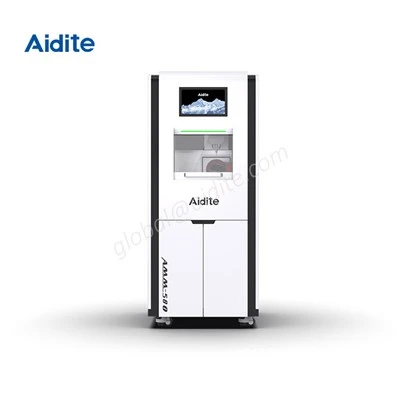
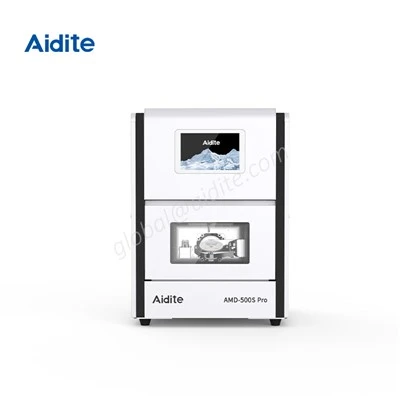
In the dental industry, we offer a range of specialized milling machines. For instance, the Dental Milling Machine with Automatic Disc Changer is designed to handle the precise milling of dental restorations. It has a unique component - the automatic disc changer, which allows for continuous operation without the need for frequent operator intervention. This not only increases efficiency but also reduces the risk of errors.
The 5 - Axis Dental Metal Milling Machine is another advanced option. Its five - axis capabilities are made possible by additional rotary and tilted components. These components enable the machine to access complex geometries from multiple angles, making it ideal for creating intricate dental crowns and bridges from metal materials.
The Dry & Wet Dental Milling Machine has a dual - mode coolant system. In dry mode, the machine can operate without coolant, which is suitable for certain types of materials and applications. In wet mode, the standard coolant system is engaged, providing cooling and lubrication as described above.
The Chairside Milling Machine and Chairside Dry Milling Machine are designed for use right in the dental office. These machines often have a more compact design, but they still contain all the essential components like a spindle, table, and control panel. The compactness is achieved through innovative design and the use of smaller - scale components without sacrificing functionality.
Conclusion
In conclusion, understanding the main components of a milling machine is crucial for anyone involved in the machining process. Whether you're a hobbyist, a professional machinist, or a dental technician, knowing how each component works and interacts with the others can help you operate the machine more effectively and achieve better results. As a milling machine supplier, we are committed to providing high - quality machines with reliable components. If you're in the market for a milling machine, whether it's for general manufacturing or dental applications, we encourage you to reach out for more information and to discuss your specific needs. We can provide detailed specifications, pricing, and technical support to help you make the right choice for your operations. Feel free to contact us to start the procurement process and take your machining to the next level.


References
- "Machinery's Handbook", Industrial Press Inc.
- "Manufacturing Engineering and Technology", by Serope Kalpakjian and Steven R. Schmid.
- Various technical manuals provided by leading milling machine manufacturers.