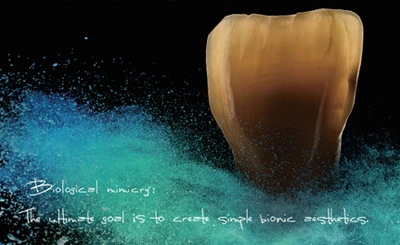
Glass-ceramics are composite materials composed of a glassy phase and a microcrystalline phase. Their core value lies in the precisely controllable coefficient of thermal expansion (CTE)-typically controlled within the range of 9.0–10.5 × 10⁻⁶/℃-creating a gradient transition with natural dentin (approximately 8.3 × 10⁻⁶/℃) and commonly used metal substrates (such as cobalt-chromium alloys, approximately 13.5 × 10⁻⁶/℃). This matching is not simply about "approaching" the material; rather, it involves adjusting the proportion of nucleating agents (such as P₂O₅ and TiO₂) in the lithium aluminum silicon system and the heat treatment regime. This allows the material to deform synchronously with the surrounding structure during sintering and cooling, significantly reducing interfacial micro-stress and preventing marginal cracking, secondary caries, or adhesive layer fatigue failure after long-term use. Clinical data shows that when the CTE deviation is > 1.2 × 10⁻⁶/℃, the 5-year porcelain chipping rate of the restoration increases by 37%. Therefore, it is not about "the harder the better," but rather "just right for stability."
 Language
- English
- Français
- Deutsch
- 日本語
- Italiano
- Español
- Português
- русский
- Eesti
- Indonesia
- Gaeilgenah Éireann
- Türkçe
- Català
- 한국어
- Latviešu
- Norsk
- slovenščina
- Kreyòl Ayisyen
- hrvatski
- Nederlands
- Bai Miaowen
- فارسی
- Ελληνικά
- বাংলা
- عربي
- slovenčina
- Việt Nam
- हिंदी
- Srbija jezik (latinica)
- עברית
- O'zbek
- українська
- suomi
- Polski
- Cymraeg
- magyar
- România limbi
- Čeština
- íslenska
- bosanski
- Български
- اردو
- ไทย
- Lietuvių
- Melayu
- Svenska
- dansk
- Malti