An intraoral scanner is a digital device used in modern dental treatment. Its concept was first proposed in 1977, the first commercial product appeared in 1987, and the process of domestic production began in 2016. Using a small, handheld optical probe, it rapidly scans the teeth, gums, and other soft and hard tissues directly inside the patient's mouth, acquiring and generating high-precision three-dimensional digital models in real time. This technology replaces traditional physical impressions, allowing the digital models to be directly transmitted to CAD/CAM systems for the design and fabrication of restorations or instruments such as crowns, veneers, implant guides, and clear aligners. Its scanning accuracy can reach the micrometer level, offering advantages such as quick operation, high patient comfort, and easy data storage and transmission. It is a key tool for achieving digital diagnosis and treatment in fields such as prosthodontics, orthodontics, and implantology. In the 2020s, intraoral scanners began integrating near-infrared imaging and other auxiliary diagnostic technologies with artificial intelligence. By 2026, its data will be used in robot-assisted minimally invasive dental surgery.
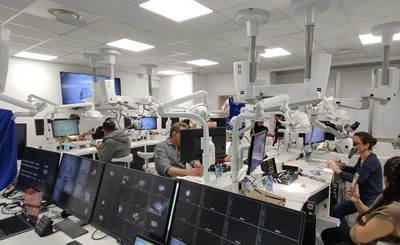
Based on the light source used, they are mainly divided into two categories: laser-based and visible light-based. Its core technical specifications are 24.95×24.95×24.95μm. The global market size reached $531 million in 2023, with the Chinese market size at 2.45 billion yuan. Industry education and training have developed accordingly, with a dental college holding a related skills competition in 2023. In 2025, Medit launched the i900 classic intraoral scanner.