Intraoral scanners, as key equipment in digital oral medicine diagnosis and treatment, have been widely applied in multiple clinical fields of oral medicine.
In the field of prosthodontics, intraoral scanning technology was first applied and is now widely and maturely used in the restoration of tooth defects (such as inlays, onlays, single crowns, and fixed bridges) and partial dentition defects, becoming one of the standard technologies in digital prosthodontic clinical practice. The digital models acquired are highly accurate, stable, and repeatable, eliminating the need for traditional impression taking and plaster model pouring processes. Advanced technologies such as digital smile design (DSD) and result-oriented digital implant guides can quickly present the expected restoration results, facilitating doctor-patient communication and effectively improving patient satisfaction.
In the field of orthodontics, malocclusion correction is another major area of clinical application for digital intraoral scanning technology. Since Align Corporation in the United States successfully produced the Invisalign clear aligner product based on data acquired by intraoral scanners in 1997, intraoral scanning technology was applied to the CAD/CAM of lingual braces brackets in 2002. This technology can be used to fabricate custom-made orthodontic appliances, such as auxiliary appliances, retainers, and personalized appliances in orthodontic treatment. It can also assist in the bonding of metal appliances using 3D-printed personalized bracket bonding guides. The analysis software accompanying the 3shapeTrios intraoral scanning system can also achieve virtual tooth alignment and tooth movement analysis.
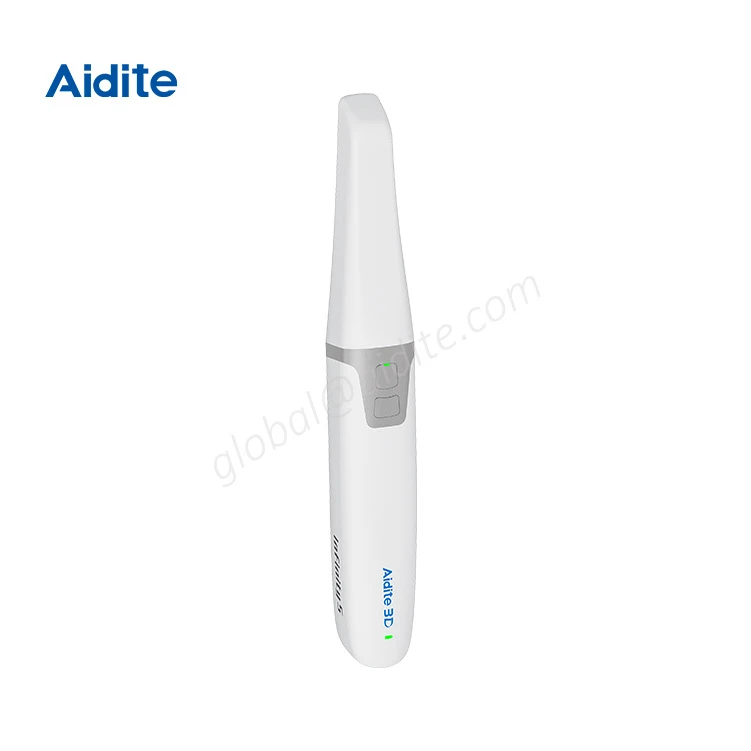
In the field of endodontics, the application of intraoral scanning technology in the diagnosis and treatment of endodontic diseases is also expanding, especially in the diagnosis and monitoring of various dental diseases, where it has made groundbreaking progress. New intraoral scanners integrating optical technologies such as near-infrared imaging (NIRI) and quantitative light-induced fluorescence (QLF) have improved the potential for caries diagnosis. In 2020, Michou et al. developed an automated caries scoring and classification system based on fluorescence imaging and color analysis for intraoral scanners; in 2024, the research team's prospective in vivo study evaluated the clinical performance of this system in detecting occlusal caries and monitoring caries progression. In vitro experiments by Mitrirattanakul et al. demonstrated that intraoral scanners and accompanying software exhibit high sensitivity and accuracy in the quantitative monitoring of tooth wear.
Laboratory studies by Charamba et al. and Denucci et al. showed that intraoral scanners have the potential to monitor the progression of non-carious neck defects (NCCL).
In the repair and special applications of maxillofacial defects, intraoral scanning technology can be used to obtain impressions for various congenital cleft lip and palate defects or those caused by acquired tumors or trauma. Yu Xiaonan et al. used intraoral scanning technology to collect data on the surface texture of the skin around the healthy side of patients with unilateral orbital defects for the design and fabrication of digital orbital prostheses. This technology can also be applied to the acquisition of intraoral tissue data in neonatal and infantile cleft lip and palate patients for the design of preoperative alveolar ridge-nose shaping appliances and the monitoring of jawbone growth and development.
In terms of occlusal analysis and splint/dental splint design, intraoral scanning technology can be used to treat patients with periodontitis. Personalized digital occlusal splints or periodontal splints have been designed based on intraoral scanning data. Clinical cases with observation periods of more than 2 years have shown that intraoral scanning data is accurate and patients experience better comfort after wearing the splints. Clinical studies have also shown that intraoral scanners have high reliability in recording intermaxillary occlusal contacts.